
Table of Contents
ToggleWaking up with a throbbing upper tooth and assuming you need a root canal is a reasonable first guess. It’s also frequently wrong. The maxillary sinuses sit directly above the roots of your upper back teeth, separated in some people by little more than a thin sheet of bone, and inflammation on either side of that barrier can radiate straight through it.
A toothache can be a sinus infection, and a sinus infection can be triggered by an infected tooth, because the maxillary sinuses and upper molar roots share nerve pathways and, in some patients, direct physical contact through paper-thin bone. This two-way relationship explains why dentists sometimes send patients to an ENT, and why ENTs sometimes send patients back to the dentist.
Telling the two apart matters for treatment. Antibiotics for a sinus infection won’t fix a dying tooth, and a root canal won’t clear a sinus that’s inflamed from allergies or a virus. Getting the source right the first time, with help from a team like Legacy Dental Studio, saves you an unnecessary procedure and a repeat visit.
How Sinus Inflammation Produces Upper Tooth Pain
Sinus inflammation presses on the same nerve branches that supply your upper teeth, so your brain reads sinus pressure as tooth pain. The maxillary sinuses are the largest of the sinus cavities, and they sit right above your upper premolars and molars.
Where the Maxillary Sinuses Sit in Relation to Tooth Roots
The maxillary sinuses are paired, air-filled spaces behind your cheekbones, positioned directly over the roots of your upper back teeth. In many people, a thin layer of bone, sometimes just a millimeter or two, is all that separates the sinus floor from the tips of those tooth roots. When the sinus lining swells from infection or allergies, that swelling pushes downward on the structures below it.
Why Referred Pain Can Feel Like a Dental Problem
The superior alveolar nerves run through the sinus floor on their way to your upper teeth, so irritation in the sinus can travel along the same nerve and register as tooth pain. This is called referred pain. It explains why a patient can feel a deep, aching pressure across several upper teeth at once, even though every one of those teeth is structurally healthy. Dentists see this often enough that it’s a standard checkpoint before recommending any drilling or root canal work.
Is It Sinus Pressure or a Dental Toothache?
Sinus pressure tends to affect multiple upper teeth at once and worsens with head movement, while a true dental toothache usually localizes to one tooth and reacts to temperature or biting. Paying attention to how the pain behaves, not just where you feel it, is the fastest way to narrow down the cause.
Which Pain Patterns Point to the Sinuses
Sinus-related tooth pain typically spreads across several upper teeth rather than pinpointing one. It gets worse when you bend forward, lie down, or climb stairs, because those positions change pressure in the sinus cavity. You’ll often notice accompanying congestion, facial pressure around the cheeks or eyes, and thicker nasal discharge. The ache tends to feel dull and constant rather than sharp.
Which Symptoms Suggest a Problem in One Tooth
A true dental toothache stays confined to a single tooth. It reacts sharply to hot or cold foods, throbs when you bite down, and can wake you at night with a sudden, focused pain. Swelling limited to the gum near one tooth, visible pus, or a loose tooth all point toward a dental source rather than sinus involvement.
When Both Dental and Nasal Symptoms Occur Together
Overlapping symptoms happen more often than either issue occurring alone. You might have genuine sinus congestion from a cold and a cavity in the same upper molar, with each condition amplifying the discomfort of the other. When nasal symptoms and tooth-specific signs (localized swelling, temperature sensitivity, pain on biting) show up together, treat it as a signal to get both a dental and a sinus evaluation rather than guessing which one to treat first.
When Can a Tooth Infection Cause Sinusitis?
A tooth infection can cause sinusitis when bacteria from an infected upper molar or premolar spread through the thin bone into the maxillary sinus, a condition called odontogenic sinusitis. Estimates suggest dental infections are behind a meaningful share of chronic sinus cases, often ones that keep coming back despite repeated rounds of antibiotics.
How an Upper Molar Infection Reaches the Maxillary Sinus
An abscess at the tip of an upper molar or premolar root builds up pus in the jawbone near the sinus floor. Given the short distance between root tip and sinus, that infected material can erode through the bone or drain directly into the sinus cavity. A failed root canal, deep decay, or advanced gum disease around that tooth are the most common starting points.
Why Odontogenic Sinusitis Needs Dental and Medical Evaluation
Odontogenic sinusitis won’t fully resolve with sinus treatment alone. Antibiotics prescribed by a physician may quiet the symptoms temporarily, but they can’t reach bacteria sealed inside a dead tooth. Unless the infected tooth is treated (through a root canal, drainage, or extraction), the sinus infection tends to return once the antibiotic course ends. Coordinated care between a dentist or endodontist and an ENT is the standard path to actually resolving it.
When to Seek Urgent Care for Infection Symptoms
Seek care the same day if you notice facial swelling, a fever, a loose tooth, or visible pus at the gumline. A dental infection can spread to the jawbone or bloodstream if it’s ignored, and that risk doesn’t wait for a convenient appointment slot. A 20-minute evaluation is worth it whenever those signs appear, even if you suspect your sinuses are the bigger issue.
Getting the Right Diagnosis Before Treatment
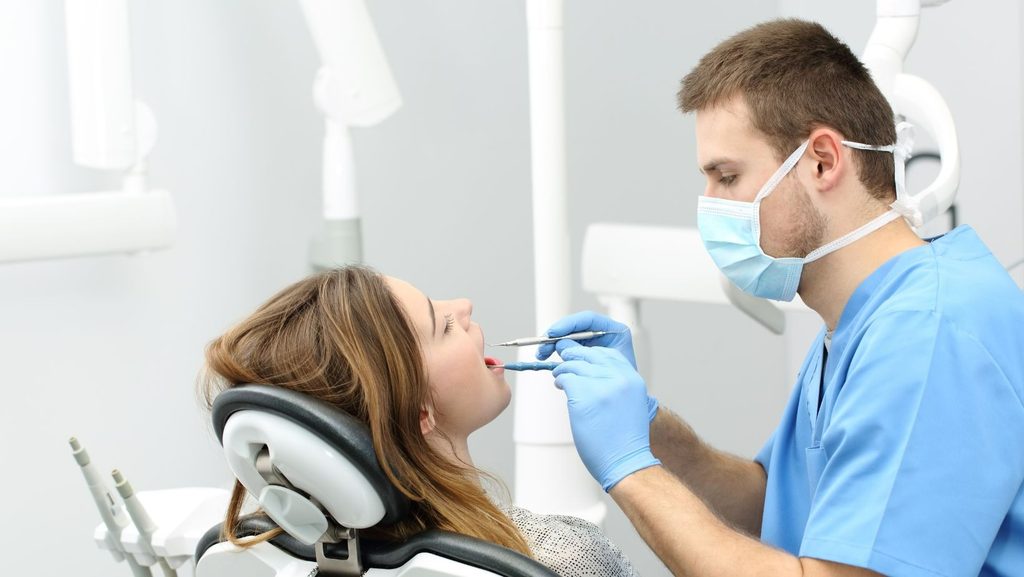
The only reliable way to know whether your pain originates in a tooth or a sinus is a targeted exam, not a home symptom checklist. A dentist can rule out (or confirm) a dental source in a single visit using tools that pinpoint the exact tooth involved.
What a Dentist Can Check for During an Exam
A dentist can test individual teeth for temperature sensitivity, tap on each tooth to check for localized pain, and take an X-ray to look for decay, abscesses, or bone loss near the roots. These tests isolate which tooth, if any, is the source. If every tooth tests normal and the X-rays look clean, that’s a strong sign the pain is coming from the sinuses instead.
When to See a Doctor or ENT Specialist
See a doctor or ENT specialist when nasal congestion, facial pressure, and thick discharge are prominent, or when a dentist has ruled out a dental cause. An ENT can examine the nasal passages, order imaging of the sinuses, and identify whether inflammation, a blockage, or a dental-origin infection is driving the sinusitis. Chronic or recurring sinus infections deserve this evaluation, since a hidden dental source can keep the cycle going.
Why Self-Tests and Pain Relief Cannot Confirm the Cause
Over-the-counter pain relievers and decongestants can mute symptoms without telling you anything about their origin. Pain that fades with a decongestant doesn’t rule out a tooth problem, and pain that fades with an ice pack doesn’t rule out sinusitis; both conditions can respond partially to the wrong treatment. Confirming the source requires an exam, imaging, or both, not a process of elimination at home.
Conclusion
Upper tooth pain and sinus pressure share nerve pathways and close anatomy, which is why either one can convincingly mimic the other. Pain confined to a single tooth, especially with temperature sensitivity or swelling, points toward a dental cause, while pain spread across multiple teeth alongside congestion points toward the sinuses.
An infected upper molar can also work in the other direction, seeding a sinus infection that won’t clear until the tooth is treated. A dental exam with X-rays and, when needed, an ENT evaluation are the only ways to confirm which one you’re dealing with before starting treatment.