Most patients hear about All-on-4 as a one-and-done solution: four implants, a fixed arch, a new smile in a day. What consultations rarely spell out is how often a second surgery enters the picture months or years later, whether from an implant that never fully integrated, bone that quietly recedes around the posts, or a bite that never settled right.
A second surgery becomes necessary when an implant fails to integrate, when peri-implantitis erodes supporting bone, or when the prosthesis creates bite forces the implants can’t sustain, and each of these problems has its own warning signs and fix. None of this means All-on-4 is unreliable. It means the procedure has failure modes that surgeons understand well but rarely walk patients through before day one.
If you’re considering all on 4 dental implants in Hutto, TX, knowing what triggers a revision, and what it involves, puts you in a better position to catch problems early and talk to your surgeon with the right questions ready.
When Is a Second Procedure Needed?
Revisions generally fall into three categories: an implant that never bonded with the jawbone, bone loss that develops years after a successful start, or a prosthetic fit that no adjustment above the gumline can correct. Each has a different timeline and a different fix.
Early Implant Failure Before Osseointegration
Implants can fail to fuse with the jawbone in the first three to six months after placement. This is called failed osseointegration, and it shows up as looseness, persistent pain, or visible movement under the prosthesis. Smoking, uncontrolled diabetes, and poor primary bone stability at placement raise the risk.
Industry guidance on the All-on-4 concept notes that when one implant fails in a four-implant arch, additional surgery is typically required because a fixed full-arch prosthesis is not biomechanically sound on three implants alone. The surgeon removes the failed implant, lets the site recover, and places a new one, sometimes shifting position or angle to find better bone.
Late Bone Loss From Peri-Implantitis
Peri-implantitis is an infection around the implant that destroys supporting bone months or years after the original surgery. It behaves like gum disease around a natural tooth, but progresses around a titanium post instead, often with less early pain than patients expect.
Warning signs include gum recession around the implant collar, bleeding when brushing, bad breath that doesn’t resolve, and a prosthesis that feels less snug over time. Left untreated, bone loss can progress to the point where the implant loosens entirely, turning a manageable infection into a full implant replacement.
Prosthetic and Bite Problems That Cannot Be Fixed Above the Gumline
Some failures start in the prosthesis, not the implant, but they still force a return to surgery. Cantilever extensions that were sized wrong for a patient’s bite, occlusal forces concentrated on too few contact points, or a bar-supported denture design that overloads specific implants can all crack materials or loosen the underlying posts.
When the strain has already transmitted down into the implant-bone interface, adjusting the bridge alone won’t hold. The surgeon has to address the implant position or number before a new prosthesis has any chance of lasting.
How Is an All-on-4 Revision Evaluated and Performed?
A revision starts with pinpointing whether the problem sits in the implant, the bone, or the prosthesis, then addresses that specific layer rather than replacing everything by default. The workup typically combines a clinical exam, imaging, and sometimes a period of monitoring before any surgical decision gets made.
Signs That Call for a Prompt Implant Assessment
Pain that persists past the initial healing window, a prosthesis that shifts or clicks when you bite down, and visible gum recession around an implant collar all warrant an evaluation sooner rather than later. So does a metallic taste or persistent bad breath that doesn’t resolve with better hygiene.
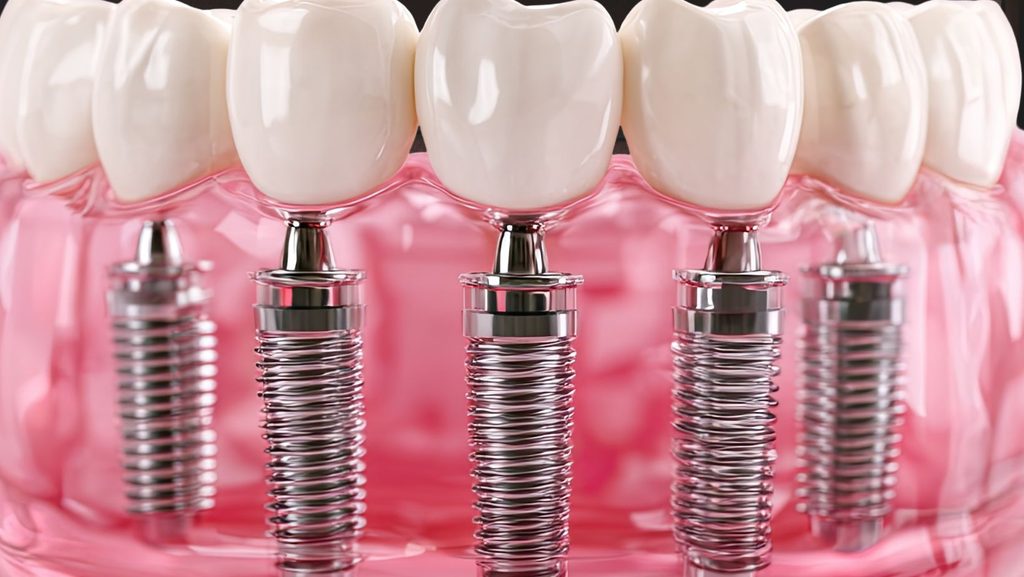
Waiting on these signs rarely helps. Bone loss around a failing implant tends to accelerate once it starts, and catching it early often means the difference between a graft-and-replace procedure and losing enough bone that the whole arch design has to change.
Imaging, Bone Assessment, and Identifying the Root Cause
CBCT imaging gives the surgeon a three-dimensional view of remaining bone volume, implant angulation, and any infection tracking along the implant surface. This is the same imaging technology used for original All-on-4 planning, now redirected at diagnosing what went wrong.
The surgeon cross-references the scan against the original surgical plan when available. A tilted posterior implant that has drifted, a graft site that didn’t take, or bone density that was borderline from the start all show up differently on a scan, and each points toward a different fix.
Implant Removal, Bone Grafting, and Re-Implantation
When an implant has failed or bone loss has progressed too far to save it, removal comes first. The site is cleaned of infected or compromised tissue, then grafted with bone material to rebuild volume before a new implant goes in.
Grafting adds healing time that the original All-on-4 protocol was designed to avoid. Depending on the graft material and defect size, the site may need three to six months to consolidate before it can support a new implant at adequate stability.
What Recovery and Temporary Teeth May Look Like
Patients typically wear a modified temporary prosthesis while the surgical site heals, similar to the provisional arch used after original placement. The temporary is adjusted to redistribute bite forces away from the healing area.
Recovery timelines vary with how much grafting was needed. A single implant replacement without grafting may heal in a similar window to the original procedure, while a case involving significant bone rebuilding extends the timeline by several months before the final prosthesis is fitted.
A Well-Planned Revision Can Restore a Stable Smile
A second surgery is not a sign that All-on-4 failed as a concept; it’s a targeted response to a specific mechanical or biological problem, whether that’s an implant that never integrated, bone eroded by infection, or a bite that overloaded the original design. Catching the warning signs early, through routine checkups and prompt attention to pain or looseness, gives surgeons more options and shorter recovery paths. With accurate imaging and a graft-and-replace approach where needed, a revised arch can hold up as well as the original plan was meant to.